
Common Security Gaps Found During IT Audits (And How to Fix Them)
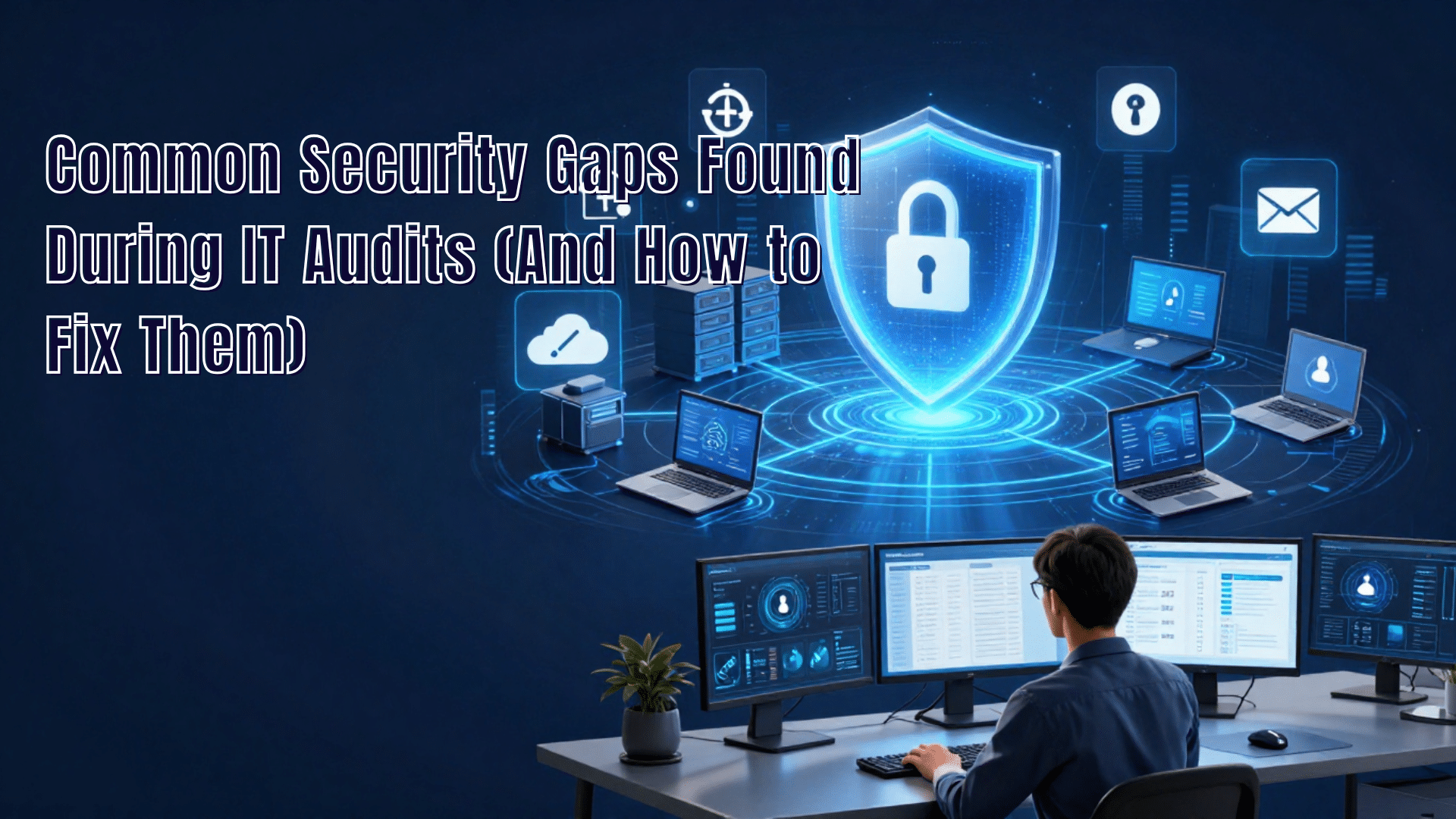
Cyber threats continue to evolve, and many businesses don't realize they have security vulnerabilities until it's too late. An IT security audit helps uncover hidden risks before cybercriminals can exploit them. Whether you're a small business or a growing enterprise, understanding the most common security gaps can help you strengthen your defenses and avoid costly downtime.
- Weak Password Policies
One of the most common findings during IT audits is poor password management. Employees often reuse passwords or create passwords that are easy to guess.
How to Fix It:
- Require strong passwords with minimum complexity requirements.
- Enable Multi-Factor Authentication (MFA).
- Use a secure password manager for storing credentials.
- Outdated Software and Operating Systems
Running outdated software leaves your business exposed to known vulnerabilities that hackers actively target.
How to Fix It:
- Implement automatic security updates.
- Regularly patch operating systems and applications.
- Replace unsupported legacy systems.
- Excessive User Permissions
Many employees have access to files and systems they don't actually need, increasing the risk of insider threats and accidental data exposure.
How to Fix It:
- Apply the Principle of Least Privilege (PoLP).
- Review user permissions regularly.
- Remove access immediately when employees leave the company.
- Missing Backup and Disaster Recovery Plans
Some organizations assume backups are working until disaster strikes.
How to Fix It:
- Perform automated daily backups.
- Store backups both onsite and offsite.
- Test disaster recovery procedures regularly.
- Poor Network Security
Misconfigured firewalls, unsecured Wi-Fi, and open ports are common issues discovered during audits.
How to Fix It:
- Review firewall configurations.
- Secure wireless networks with modern encryption.
- Close unnecessary ports and services.
- Lack of Employee Security Awareness
Technology alone cannot stop phishing attacks if employees aren't trained to recognize them.
How to Fix It:
- Conduct regular cybersecurity awareness training.
- Perform phishing simulation exercises.
- Create clear security policies.
- Missing Endpoint Protection
Laptops, desktops, and mobile devices often lack adequate security controls.
How to Fix It:
- Deploy Endpoint Detection and Response (EDR) solutions.
- Keep antivirus software updated.
- Monitor devices continuously.
- Inadequate Security Monitoring
Without monitoring, businesses may not detect suspicious activity until significant damage has occurred.
How to Fix It:
- Enable centralized log monitoring.
- Review security alerts daily.
- Consider managed security monitoring services.
Why Regular IT Audits Matter
Security gaps aren't always obvious. Many organizations believe they're protected simply because they have antivirus software or a firewall installed. An IT security audit provides a complete assessment of your infrastructure, identifies vulnerabilities, and offers practical recommendations to improve your security posture before attackers find the weaknesses.
Final Thoughts
Cybersecurity isn't about being perfect—it's about continuously improving. By identifying and fixing common security gaps, your business can reduce risk, improve compliance, and protect critical data from today's evolving cyber threats.
Ready to Find Hidden Security Risks?
Jackson Technologies helps businesses identify vulnerabilities before they become costly security incidents. Our comprehensive IT Security Audit evaluates your network, systems, user access, and security practices, providing actionable recommendations to strengthen your cybersecurity.