
The State of MFA in 2025: What’s New, What’s Next
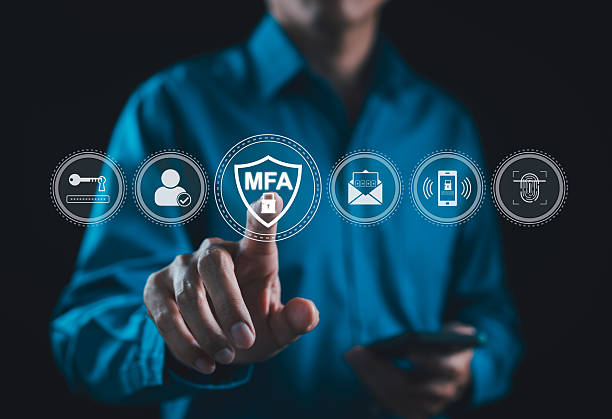
For years, Multi-Factor Authentication (MFA) has been championed as one of the strongest defenses against unauthorized access. But threats evolve, users push back on friction, and technology keeps pushing boundaries. In 2025, we’re seeing MFA mature in some exciting (and challenging) ways.
Why MFA Still Matters
- Even if a password is stolen or phished, MFA adds a second (or third) barrier an attacker must breach.
- Industry research shows that while many leaders believe phishing-resistant MFA is essential, confidence in existing controls is still low.
- The MFA market is growing fast. Some forecasts anticipate the global MFA market reaching $17–$50+ billion in the near term, driven by demand for stronger identity security.
Thus, MFA isn’t optional anymore — it’s foundational. But the “how” and “which variant” matters more than ever.
Emerging Trends in MFA for 2025
Here are the major themes shaping modern authentication:
- Adaptive / Contextual Authentication
Instead of rigid “always ask for second factor” rules, adaptive MFA adjusts the level of challenge based on risk:
- Factors considered include device reputation, geolocation, time of access, behavioral patterns, network anomalies, etc.
- Low-risk logins may require no extra step, while high-risk scenarios (e.g. new device, foreign IP) trigger stricter validation.
- This reduces “MFA fatigue,” where users are frustrated by repeated prompts.
- Passwordless + Phishing-Resilient Methods
Part of the drive is to reduce reliance on passwords entirely:
- Passkeys / WebAuthn / FIDO2 are becoming more widely adopted. These use cryptographic keys stored on the device (or hardware key), reducing the attack surface of stolen passwords.
- Biometric authentication (fingerprint, facial recognition) is increasingly paired with device-bound credentials.
- Hardware security keys (U2F / FIDO) remain among the most secure second factors.
These methods are more resistant to phishing attacks, replay attacks, and man-in-the-middle exploits compared to OTPs alone.
- Stronger Use of AI / ML for Risk Scoring
To support adaptive authentication, AI/ML models play a key role:
- Continuous analysis of user behavior (typing patterns, session habits) helps detect anomalies mid-session.
- Models assist in deciding whether an MFA should escalate—thus acting as decision support.
- The best solutions will combine static checks (e.g. IP, device) with behavioral signals.
- Decentralized Identity & Blockchain-based Auth
A more ambitious direction is shifting away from centralized identity stores:
- Decentralized Identity (DID) frameworks (often leveraging blockchain) aim to give users more control over their credentials.
- In such systems, authentication might rely on cryptographic proofs rather than a central server verifying a password or token.
- Regulatory & Risk-Based Requirements
We’re seeing regulators and financial systems pushing for more robust authentication frameworks:
- In some countries, payment systems are being updated to require risk-based checks or multi-factor authentication under certain thresholds. (E.g., new guidelines in India will require additional authentication depending on risk assessment).
- As digital transactions increase, regulators see MFA (and stronger variants) as part of fraud prevention mandates.
- Inclusivity & Accessibility Considerations
One challenge of MFA is ensuring it doesn’t lock out users with disabilities or special needs:
- Recent research highlights the need to make 2FA/MFA choices accessible (e.g. alternatives for those who cannot use biometrics or certain devices).
- Developers must provide fallback methods, ensure UI/UX clarity, and test with diverse user groups.
Challenges & Pitfalls to Watch Out For
Even with improvements, MFA is not magic. Some caveats:
- MFA fatigue / prompt spamming: Overusing MFA prompts can lead to users habitually approving requests. Adaptive MFA helps mitigate this.
- Recovery & backup: If the primary second factor fails (device lost, key broken), backup paths must be secure and well-designed.
- Phishing and social engineering: Attackers continue to evolve—fake MFA prompts, push confirmation scams, or prompt bombing.
- Adoption inertia: Many organizations still rely on SMS OTPs or weak 2FA that attackers can bypass.
- Interoperability and standard support: Not all apps or platforms yet support modern standards like WebAuthn or passkeys.
Recommendations: How to Stay Ahead
If you’re planning your next-gen authentication strategy, here’s how to make it future-proof:
- Adopt MFA broadly, not just for critical systems—normalize it.
- Implement adaptive / risk-based MFA to balance security and usability.
- Start migrating toward passwordless / phishing-resistant methods (passkeys, WebAuthn, hardware keys).
- Incorporate behavioral analytics to detect anomalies continuously.
- Account for accessibility—design fallback options, test with diverse users.
- Plan for recovery paths (lost devices, hardware key breakage) that don’t weaken security.
- Monitor regulatory requirements, especially in financial/digital payment sectors.
- Educate users—even the best tech fails if users don’t understand what to do or fall for social engineering.
Why This Matters for Your Organization
Implementing advanced MFA helps you:
- Drastically reduce account takeover risks
- Strengthen compliance posture
- Improve user trust and security reputation
- Prepare infrastructure for more stringent future requirements
Take Action with Jackson
At Jackson Technologies, we help businesses implement smarter, stronger security practices—like Multi-Factor Authentication—tailored to your unique needs. From choosing the right MFA solutions to training your team, we’ll make sure your defenses stand strong.
🔐 Don’t wait until it’s too late.
👉 Take action with Jackson—your cybersecurity satisfaction!