
Why “We Have Antivirus” Is Not Enough to Protect Your Business
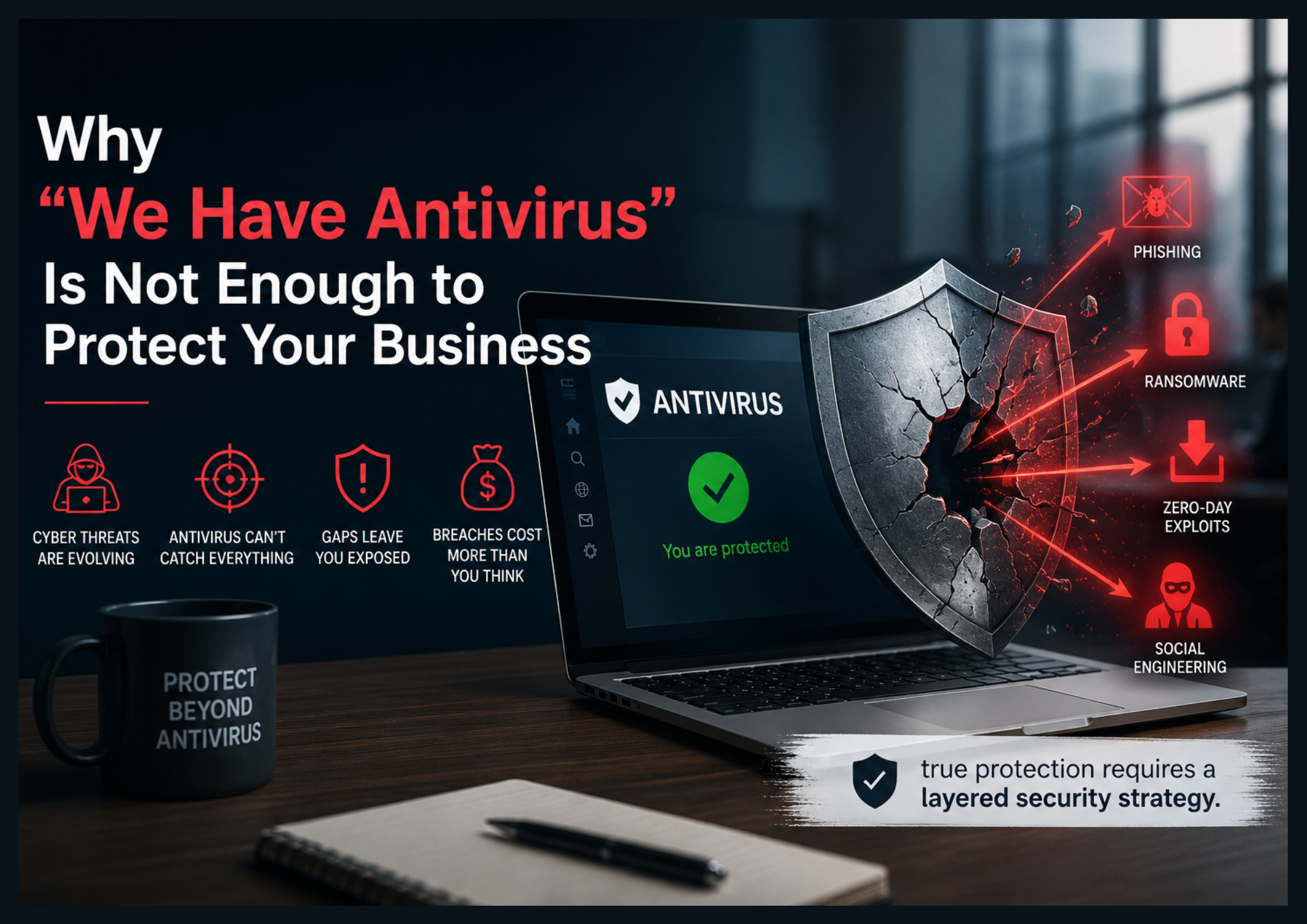
Many business owners believe that installing antivirus software is enough to keep their systems secure. While antivirus solutions play an important role in cybersecurity, relying on them alone can leave your business vulnerable to modern cyber threats.
Today's cybercriminals use sophisticated tactics that often bypass traditional antivirus protection. If your security strategy begins and ends with antivirus software, your organization may be at greater risk than you realize.
The Evolution of Cyber Threats
Years ago, antivirus software was highly effective against known viruses and malware. However, cyberattacks have become more advanced. Modern threats include:
- Ransomware attacks
- Phishing emails
- Business Email Compromise (BEC)
- Insider threats
- Credential theft
- Zero-day vulnerabilities
- Advanced persistent threats (APTs)
Many of these attacks target human behavior, system vulnerabilities, and network weaknesses rather than simply installing malicious files.
Antivirus Only Detects Part of the Problem
Antivirus software primarily focuses on identifying and blocking known malware signatures. However, attackers continuously develop new methods to evade detection.
For example:
- Employees may unknowingly click phishing links.
- Weak passwords can be compromised.
- Unpatched software can be exploited.
- Misconfigured cloud services can expose sensitive data.
These threats often occur without triggering antivirus alerts.
Essential Layers of Modern Cybersecurity
Effective cybersecurity requires multiple layers of protection, including:
- Security Audits and Assessments
Regular audits help identify vulnerabilities before attackers find them.
- Endpoint Detection and Response (EDR)
Advanced monitoring tools detect suspicious behavior that traditional antivirus may miss.
- Employee Security Training
Human error remains one of the leading causes of security incidents. Ongoing training helps employees recognize cyber threats.
- Patch Management
Keeping software and operating systems updated closes security gaps that hackers exploit.
- Backup and Disaster Recovery
Reliable backups ensure business continuity if ransomware or data loss occurs.
- Multi-Factor Authentication (MFA)
MFA adds an extra layer of protection to user accounts and significantly reduces unauthorized access.
The Cost of a False Sense of Security
Many businesses discover the limitations of antivirus only after experiencing a security breach. The consequences can include:
- Financial losses
- Business downtime
- Regulatory penalties
- Loss of customer trust
- Reputation damage
A comprehensive cybersecurity strategy is far less costly than recovering from a successful attack.
Conclusion
Antivirus software remains an important cybersecurity tool, but it should never be your only line of defense. Modern threats require a layered security approach that combines technology, employee awareness, monitoring, and regular security assessments.
Protect Your Business Before a Breach Happens
At Jackson Technologies, we help businesses identify vulnerabilities and strengthen their cybersecurity posture through comprehensive IT Security Audits and proactive security solutions.
Contact Jackson Technologies today for a FREE Security Audit and discover where your business may be at risk before cybercriminals do.