Cybersecurity for Small Businesses: Where to Start
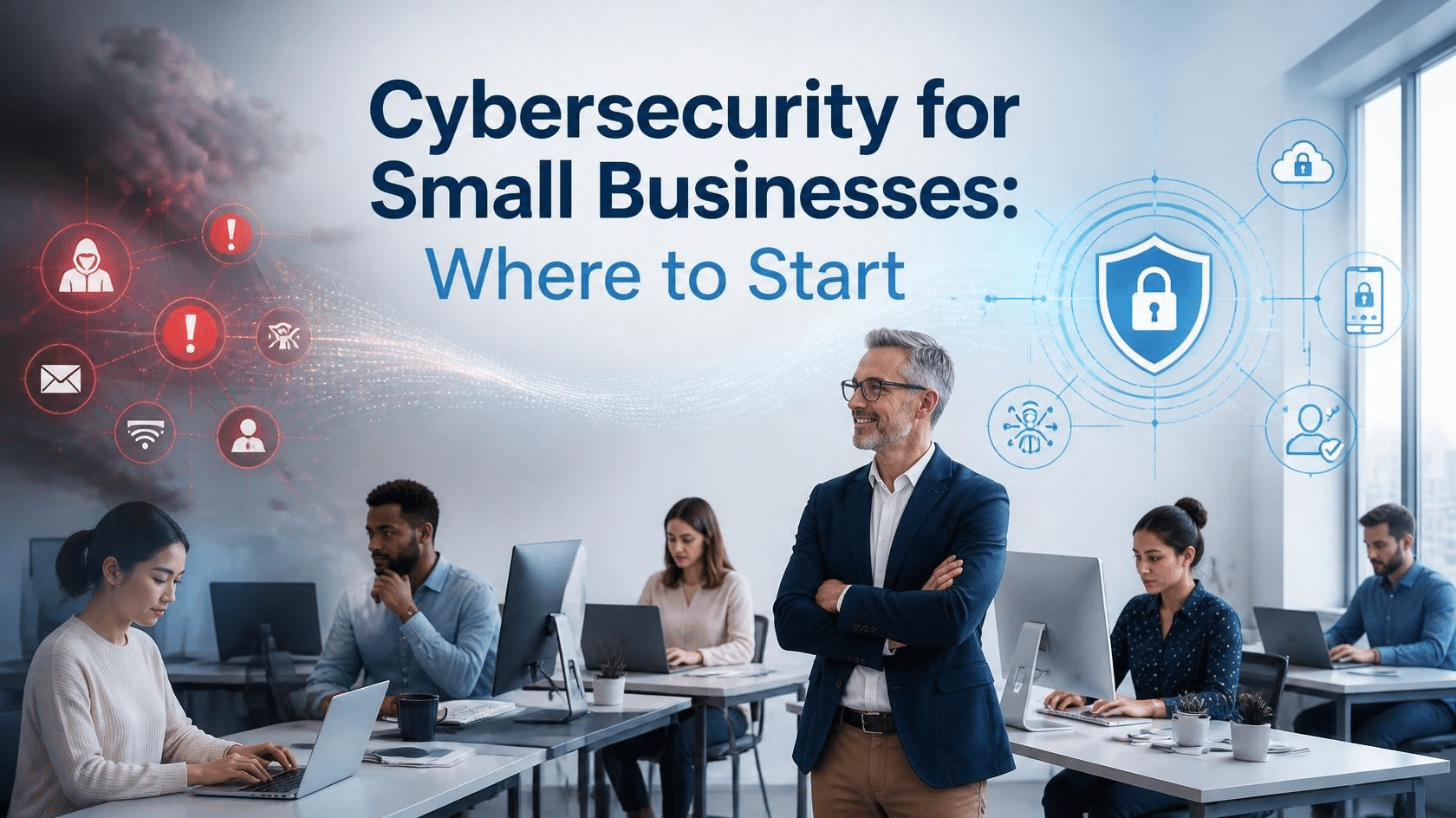
Cybersecurity can feel overwhelming for small businesses.
You may hear about ransomware, phishing, data breaches, zero-day vulnerabilities, and other threats and wonder: Where do we even start?
The good news is that improving cybersecurity doesn't require doing everything at once. Small businesses can make significant improvements by focusing on the basics and addressing their biggest risks first.
Here is where to start.
- Know What You're Protecting
Before improving security, identify what matters most to your business.
Think about:
- Customer information
- Employee information
- Financial records
- Business documents
- Email accounts
- Company websites
- Cloud applications
- Computers and servers
- Business-critical software
Knowing what you have—and where it is stored—makes it easier to determine what needs the strongest protection.
- Strengthen Your Passwords
Weak or reused passwords remain an easy target for attackers.
Encourage employees to use unique passwords for business accounts and avoid sharing credentials.
Whenever possible, enable multi-factor authentication (MFA). Even if a password is stolen, MFA can provide another layer of protection against unauthorized access.
A password manager can also help employees securely manage unique passwords without having to remember dozens of them.
- Keep Software and Devices Updated
Outdated software can contain vulnerabilities that attackers know how to exploit.
Make sure computers, servers, applications, firewalls, and other network-connected devices receive security updates regularly.
Don't forget about devices that may be overlooked, such as:
- Printers
- Wi-Fi equipment
- Security cameras
- Remote-access devices
- Network switches
- Mobile devices
Regular patch management can significantly reduce unnecessary exposure.
- Protect Your Email
Email is one of the most common ways attackers attempt to enter a business.
Employees should be trained to recognize suspicious messages, unexpected attachments, fake invoices, and requests for passwords or financial information.
Businesses should also consider email security tools that can help identify phishing and malicious messages before they reach employees.
- Back Up Important Data
A good backup strategy can make a major difference during a ransomware attack, hardware failure, or other disaster.
Important business data should be backed up regularly, and backups should be protected from unauthorized access.
Most importantly, test your backups.
A backup that cannot be successfully restored when you need it isn't a reliable recovery strategy.
- Control Who Has Access
Not every employee needs access to every system or file.
Use the principle of least privilege, which means employees should receive only the access they need to perform their jobs.
Regularly review employee accounts and remove access when employees leave the company or change positions.
- Secure Remote Work
Many small businesses rely on remote employees, contractors, and cloud-based systems.
Make sure remote access is protected with strong authentication, updated devices, secure connections, and appropriate access controls.
Avoid allowing employees to access sensitive company information from unsecured or unmanaged devices whenever possible.
- Train Your Employees
Your employees are an important part of your cybersecurity strategy.
Regular security awareness training can help employees recognize:
- Phishing emails
- Suspicious links
- Social engineering attempts
- Fake login pages
- Unexpected payment requests
- Malware and ransomware warnings
Cybersecurity shouldn't be a once-a-year conversation. Short, regular reminders can help keep security awareness fresh.
- Create an Incident Response Plan
What would your business do if your network was compromised tomorrow?
Without a plan, employees may not know who to contact, what systems to shut down, or how to preserve important information.
An incident response plan should clearly define responsibilities and provide steps for responding to common scenarios such as ransomware, stolen credentials, data breaches, and system outages.
- Start with a Security Audit
If you're unsure where your cybersecurity weaknesses are, don't try to guess.
A professional IT security audit can provide a clearer picture of your current security posture. It can identify vulnerabilities, outdated systems, unnecessary access, configuration issues, and other risks that may not be obvious during day-to-day operations.
Instead of trying to fix everything at once, an audit can help you prioritize the improvements that matter most.
Cybersecurity Doesn't Have to Be Complicated
Small businesses don't need an unlimited cybersecurity budget to start protecting themselves.
Start with the fundamentals:
Strong passwords → MFA → Updated systems → Secure backups → Employee training → Access controls → Regular security audits
These foundational steps can significantly improve your organization's security and make it harder for attackers to take advantage of common weaknesses.
Start Your Cybersecurity Journey with Jackson Technologies
At Jackson Technologies, we help small and mid-sized businesses understand their technology risks and take practical steps toward stronger cybersecurity.
If you're not sure where your business stands, a FREE IT Security Audit can be a great place to start.
Don't wait until a cyberattack forces you to take action. Contact Jackson Technologies today and find out where your business may be vulnerable—and what you can do about it.